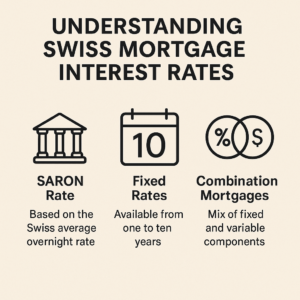
Understanding Swiss Mortgage Interest Rates
Swiss mortgage interest rates play a crucial role in the cost of home financing, and understanding how they work is essential for anyone planning to purchase property in Switzerland. Whether you are a resident, expat, or investor, gaining clarity on how rates are set, what influences them, and how they differ between mortgage types will help you make more informed financial decisions.
In Switzerland, mortgage interest rates are typically shaped by several key factors, including the Swiss National Bank (SNB) policy rate, market competition among lenders, and broader economic conditions such as inflation and long-term bond yields. Because Switzerland has historically maintained a stable financial environment, interest rates tend to be relatively low compared to many other countries—although they have experienced fluctuations in recent years.
The basis for most Swiss mortgage pricing is the reference interest rate determined by the SNB. When the SNB raises or lowers its policy rate, lenders usually adjust their mortgage rates accordingly. For example, an increase in the SNB policy rate typically pushes up both fixed and variable mortgage rates. Conversely, when the SNB lowers rates, mortgage rates tend to follow. This connection is why keeping an eye on SNB announcements is so important for prospective homeowners.
There are three main types of mortgage interest structures in Switzerland: fixed-rate mortgages, variable-rate mortgages, and SARON-based mortgages. Each carries unique benefits and risks.
A fixed-rate mortgage provides stable and predictable payments for a defined period, usually between 2 and 15 years. This option is ideal for borrowers who prefer financial certainty and want to lock in a rate they feel is advantageous. However, fixed-rate mortgages can be less flexible, and breaking the contract early often results in significant penalties.
A variable-rate mortgage fluctuates based on market conditions and tends to rise and fall with broader interest rate movements. While variable rates can sometimes be lower than fixed rates, they carry the risk of increasing during the loan term. This type of mortgage is best suited for borrowers who can tolerate fluctuations or expect rates to remain stable or decline.
The increasingly popular SARON mortgage is tied to the Swiss Average Rate Overnight, a benchmark reflecting real market transaction costs. SARON-based mortgages adjust periodically—typically every 3 months—and generally offer transparent pricing and potentially lower rates than traditional variable mortgages. However, they still carry the risk of upward adjustments if market rates rise.
When comparing mortgage interest rates, borrowers should also consider additional factors such as affordability stress tests, mortgage term length, refinancing options, and total long-term borrowing costs. Swiss lenders often assess affordability based on a hypothetical interest rate of around 5%, even if actual rates are lower. This ensures borrowers can handle future fluctuations.
Understanding these elements will help you choose the right mortgage type for your financial goals and risk tolerance. With a clear grasp of how Swiss mortgage interest rates work, you can better navigate the property market and secure a financing solution that aligns with your long-term plans.