Swiss amortization calculator
Understanding how mortgage amortization works in Switzerland is essential for anyone planning to buy a home or refinance their existing mortgage. An amortization calculator helps you estimate how quickly your mortgage balance will decrease, how much interest you will pay over time, and what your long-term financial obligations will look like. Since Switzerland has specific rules for amortization, using a calculator built around Swiss standards ensures accurate, realistic budgeting.
How Amortization Works in Switzerland
In Switzerland, amortization refers to paying down the part of the mortgage that exceeds 67% of the property value. This means that homeowners must reduce their mortgage to a maximum of 66% loan-to-value (LTV) within a set timeframe. Typically, this amortization period lasts between 10 and 15 years, although some lenders offer flexibility depending on income, age, and mortgage structure.
There are two amortization methods:
1. Direct Amortization
You repay the mortgage principal directly with each installment. This reduces your mortgage balance over time and lowers long-term interest costs. While it increases your monthly payments, it provides clear visibility on how fast the debt decreases.
2. Indirect Amortization
Instead of repaying the mortgage directly, you contribute to a Pillar 3a pension account. The funds accumulate and act as collateral until they are used to pay down the mortgage later. This method offers tax advantages, as 3a contributions are deductible from taxable income, but the mortgage balance remains higher during the loan term, resulting in more interest paid.
What an Amortization Calculator Shows You
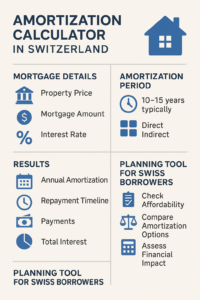
A Swiss amortization calculator is designed to provide insights based on national affordability and lending rules. With just a few inputs—property price, mortgage amount, interest rate, amortization period, and amortization method—you can view:
- Annual amortization requirements
- Total amortization timeline until you reach 66% LTV
- Monthly or annual payments
- Difference between direct and indirect amortization
- Total interest paid over the repayment period
- Impact of voluntary extra payments
For indirect amortization, the calculator may also estimate 3a growth, tax savings, and how the future payout affects your loan balance.
Why Use an Amortization Calculator?
A Swiss-specific amortization calculator helps you prepare more accurately than general mortgage tools. Swiss banks apply strict affordability rules—assuming a 5% theoretical interest rate, 1% maintenance costs, and 1% amortization. Using a calculator tailored to these standards lets you assess:
- Whether your financing plan fits affordability criteria
- How long you will pay amortization
- How different amortization choices affect your budget
- Whether switching between direct and indirect amortization makes sense
- The impact of higher equity or additional payments
Smart Planning for Swiss Homeowners
Amortization is a major part of long-term mortgage planning in Switzerland, and small decisions can lead to significant savings. Whether you’re buying your first property, refinancing, or comparing mortgage strategies, an amortization calculator provides clarity and confidence. It is one of the best tools to evaluate both the immediate and long-term financial impact of your mortgage structure.