Swiss real estate price predictions
Market Predictions for Swiss Real Estate Prices remain one of the most discussed topics among homeowners, buyers, and investors in Switzerland. With interest rates shifting, demand patterns evolving, and regulatory measures influencing affordability, the Swiss property market is entering a new phase. Understanding where prices may move in the coming years helps buyers make informed decisions and allows investors to plan strategically (Swiss real estate price predictions).
Over the past decade, Swiss real estate prices have grown consistently, driven by low interest rates, limited housing supply, and strong population growth. Even during global economic uncertainties, Switzerland’s real estate market remained resilient thanks to its stable economy, high purchasing power, and strict lending practices that prevent overheating. However, 2024–2025 has marked a shift: rising mortgage rates, inflation, and stagnating household income levels are reshaping demand.
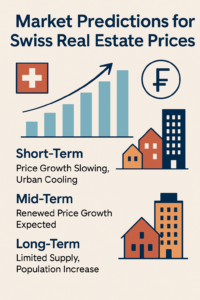
Short-Term Price Outlook (2024–2025)
In the short term, price growth is expected to slow, especially in urban regions such as Zurich, Geneva, Lausanne, and Basel. Higher mortgage costs have reduced affordability, resulting in fewer buyers and longer selling times. Analysts predict a stabilization phase rather than a sharp decline, with variations depending on area. Rural and semi-urban regions with lower price brackets may continue to see moderate growth as buyers search for more affordable alternatives.
Luxury real estate and high-end investment properties may remain stable due to strong international demand and limited supply. However, new construction projects may face delays or cost increases due to rising material prices and stricter energy-efficiency requirements.
Mid-Term Price Outlook (2026–2028)
The mid-term outlook becomes more optimistic if inflation stabilizes and the Swiss National Bank begins lowering rates. Lower borrowing costs typically revive buying interest and put upward pressure on prices. Cities with high job market demand—such as Zurich, Zug, Geneva, and Lausanne—are likely to see renewed price growth.
Demographic trends also support long-term demand. Switzerland continues to attract skilled professionals from abroad, and the persistent housing shortage in large cities will likely keep prices elevated. Cantons with favourable tax conditions (Zug, Schwyz, Nidwalden) may see above-average appreciation due to continued appeal for high-income residents.
Long-Term Price Outlook (2028 and Beyond)
In the long run, Swiss real estate prices are expected to trend upward, although at a slower pace than the past decade. Key growth drivers include population increase, limited land availability, strong economic fundamentals, and the high desirability of Swiss cities for both residents and international investors.
However, stricter sustainability requirements and renovation needs could increase costs for older properties, making energy-efficient homes more valuable. This shift may create a price gap between renovated and non-renovated properties.
Conclusion
Overall, Swiss real estate is expected to remain a stable and resilient market. While short-term stabilization is likely, mid-to-long-term growth prospects remain positive due to strong fundamentals, limited supply, and ongoing demand. Buyers should look for opportunities during the current slowdown, while sellers should prepare for a more balanced market.