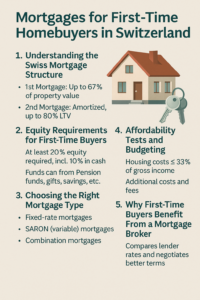
Mortgages for first-time homebuyers Switzerland
Buying your first home in Switzerland is an exciting milestone, but the mortgage process can feel overwhelming—especially if you are navigating the Swiss system for the first time. Strict affordability rules, high property prices, and significant equity requirements make preparation essential. Understanding how Swiss mortgages work will help first-time homebuyers make confident, informed decisions and secure the best financing solution (mortgages for first-time homebuyers Switzerland).
1. Understanding the Swiss Mortgage Structure
Swiss mortgages are typically structured differently from those in many other countries. Instead of repaying the entire mortgage, homeowners are only required to amortize the loan down to two-thirds of the property value. Mortgages are split into two parts:
- 1st Mortgage: Up to 67% of the property value. This portion does not need to be fully repaid.
- 2nd Mortgage: The remaining amount up to 80% LTV (loan-to-value). This portion must be amortized over 10–15 years.
First-time buyers should also understand that Swiss banks assess affordability using a theoretical interest rate (usually around 5%), not the actual current rate. This ensures buyers can still afford the mortgage even if rates rise.
2. Equity Requirements for First-Time Buyers
Switzerland requires at least 20% equity, and at least 10% must be in cash. The remaining 10% may come from:
- Pillar 2 pension funds (withdrawal or pledge)
- Pillar 3a retirement savings
- Gifts or family loans
- Savings or investments
Using pension funds can help first-time buyers bridge the equity gap, but it also impacts retirement planning. A mortgage broker can help determine the most suitable approach.
3. Choosing the Right Mortgage Type
First-time homebuyers in Switzerland can choose between:
- Fixed-rate mortgages: Stable monthly payments and predictable long-term planning.
- SARON (variable) mortgages: Rates linked to the Swiss Average Rate Overnight, fluctuating with market conditions.
- Combination mortgages: A blend of fixed and variable components.
Each option has advantages depending on income stability, risk tolerance, and financial goals. Many first-time buyers prefer fixed-rate mortgages for peace of mind.
4. Affordability Tests and Budgeting
Banks require that total housing costs—interest, amortization, and maintenance—do not exceed 33% of gross household income. Even if interest rates are currently low, banks calculate affordability using the higher imputed rate. Because of this, buyers with strong incomes but limited savings can still face challenges with eligibility.
In addition to mortgage costs, first-time buyers should budget for:
- Property transfer taxes
- Notary fees
- Land registry fees
- Renovation or furnishing costs
- Annual maintenance (~1% of property value)
5. Why First-Time Buyers Benefit From a Mortgage Broker
A mortgage broker can simplify the process by:
- Comparing interest rates across banks, insurers, and digital lenders
- Structuring mortgage and amortization plans
- Helping optimize equity contributions
- Negotiating better terms than standard bank offers
This support is especially valuable for buyers unfamiliar with the Swiss market.