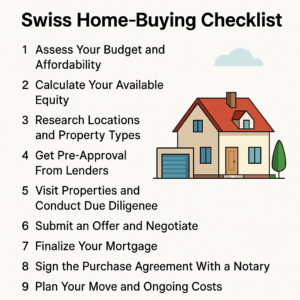
Swiss home-buying checklist
Buying a home in Switzerland is an exciting milestone, but the process can also feel complex due to strict affordability rules, regulatory requirements, and regional differences. Whether you are a first-time buyer, an expat settling in Switzerland, or a homeowner looking to upgrade, having a clear and structured checklist ensures you stay organized from your initial financial planning all the way to receiving the keys. This Swiss home-buying checklist is designed to guide you step-by-step through everything you need to review, prepare, and complete for a smooth and successful property purchase.
1. Assess Your Budget and Affordability
Before looking at properties, determine what you can realistically afford based on Swiss mortgage rules. Lenders typically require that total housing costs do not exceed one-third of your gross income. Affordability is calculated using an imputed interest rate (usually around 5%), plus amortization and maintenance costs. Understanding these numbers early helps you search within an appropriate price range.
2. Calculate Your Available Equity
Swiss lenders require a minimum down payment of 20% of the property’s purchase price. At least 10% must come from non-pension assets, while the remaining can come from your pension fund (Pillar 2 or Pillar 3a). Knowing your equity structure early helps you determine your financing strategy and whether you need to use pension funds, savings, or gifts.
3. Research Locations and Property Types
Switzerland has significant differences in property prices, taxes, and regulations across cantons and even municipalities. Define your priorities: proximity to work, schools, public transport, lifestyle preferences, and long-term value. Also decide whether you are looking for an apartment (Eigentumswohnung), a single-family home (Einfamilienhaus), or a multi-unit property.
4. Get Pre-Approval From Lenders
A mortgage pre-approval strengthens your position when making an offer and gives you a clear idea of financing conditions. Consider comparing offers from banks, insurance companies, and mortgage brokers to secure the best terms. Pre-approval also helps you move quickly once you find the right property.
5. Visit Properties and Conduct Due Diligence
During property visits, inspect the building’s condition, age, renovation history, and any planned maintenance. Review building regulations, the property’s energy efficiency rating, and the status of the homeowners’ association fund (if buying an apartment). Always request the official sales dossier to check all technical and legal information.
6. Submit an Offer and Negotiate
Swiss property negotiations are generally professional and structured. Once you decide on a property, submit your offer with supporting documents, including proof of financing. Be clear about conditions such as timing, price, included items, and contingencies.
7. Finalize Your Mortgage
Once your offer is accepted, finalize your mortgage terms. Choose between fixed, variable, or SARON-based rates, and select your amortization strategy. Your mortgage provider will prepare all required documents for the notary.
8. Sign the Purchase Agreement With a Notary
In Switzerland, all property transactions must be completed through a notary. The notary prepares the official contract, oversees signatures, and records the transfer in the land registry. After this step, the home legally becomes yours.
9. Plan Your Move and Ongoing Costs
Prepare for insurance, utilities, relocation, and future maintenance. Swiss homes require regular upkeep, so budgeting long-term expenses is important.