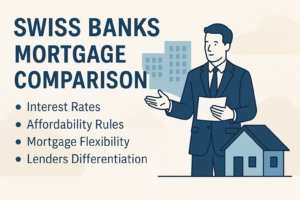
Swiss banks mortgage comparison
Choosing the right mortgage in Switzerland often starts with comparing offers from the country’s leading banks and financial institutions. Because mortgage rates can vary widely depending on your borrower profile, property type, and chosen mortgage structure, a detailed comparison allows you to save money, understand long-term costs, and secure terms that fit your financial goals. A Swiss mortgage is typically a multi-decade commitment, making the lender you choose just as important as the mortgage itself (Swiss banks mortgage comparison).
Swiss banks determine their rates using internal pricing models that consider funding costs, market conditions, risk appetite, and competitive positioning. For this reason, two lenders can offer noticeably different interest rates even for the same borrower profile. Fixed-rate mortgages, SARON mortgages, and combinations also fluctuate differently from bank to bank, so taking the time to compare helps ensure that you don’t overpay.
When comparing Swiss banks, it is essential to look beyond the headline interest rate. Additional elements such as amortization requirements, sustainability incentives, penalties for early repayment, and refinancing flexibility can significantly impact total long-term costs. Some lenders also specialize in particular borrower types—self-employed individuals, expats, pensioners, or high-net-worth clients—and may offer more favorable conditions depending on your situation.
One major advantage of comparing lenders is the ability to negotiate. Swiss banks often adjust their rates if a borrower presents a cheaper competitor offer. A mortgage comparison empowers you to create competition between lenders, encouraging them to reduce margins, waive certain fees, or provide more flexible terms. The difference of even 0.10% in interest can translate into tens of thousands of francs saved over the mortgage lifespan.
Another crucial factor is how banks treat SARON-based mortgages. Some institutions offer highly competitive margins, while others charge noticeably higher risk premiums. For borrowers expecting stable or falling rates, choosing a bank with a low SARON margin can produce substantial savings. Conversely, if long-term stability is a priority, comparing fixed-rate conditions across banks—especially for 5-, 7-, and 10-year terms—ensures you find the most favorable match.
Digital lenders, neo-banks, and insurance companies have become strong competitors to traditional banks. They often provide lower interest rates due to leaner cost structures, but they may have stricter lending criteria. Including them in your comparison can further widen your options.
A thorough Swiss mortgage comparison should also consider:
- Affordability requirements
Some banks apply stricter affordability calculations than others. - Property type restrictions
Certain lenders limit mortgages for vacation homes, investment properties, or second homes. - Early repayment and refinancing flexibility
Banks differ considerably in how they handle contract adjustments.
Working with a mortgage broker can simplify the process by giving you access to a broad range of lenders and negotiating on your behalf. This ensures faster results and better terms without the stress of comparing dozens of offers yourself.