Vacation home mortgage Switzerland
Purchasing a vacation home or secondary residence in Switzerland is an attractive option for many buyers—both residents and foreigners—who want a retreat in the Alps, a lakeside getaway, or a property in one of Switzerland’s picturesque mountain resorts. However, financing a second home works quite differently from financing a primary residence. Swiss lenders apply stricter affordability rules, require higher equity, and closely assess the property’s intended use. Understanding these requirements is essential for anyone planning to buy a holiday or secondary residence (vacation home mortgage Switzerland).
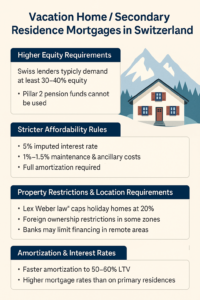
Higher Equity Requirements
The most significant difference between a primary and secondary residence mortgage is the required down payment. For vacation homes, Swiss lenders typically require at least 30–40% equity, compared to 20% for a main residence. The higher down payment reduces the lender’s risk, especially given the volatile nature of the holiday-home market in tourist regions.
Additionally, Pillar 2 pension funds cannot be used for secondary residence purchases. Buyers must rely on cash savings, securities, or other non-pension assets to cover the equity requirement.
Stricter Affordability Rules
Affordability assessments for secondary residences are more conservative. Lenders calculate affordability using:
- 5% imputed interest rate
- 1%–1.5% for maintenance and ancillary costs
- Full amortization requirements
Furthermore, lenders often expect buyers to demonstrate strong income stability, as second homes are considered a financial luxury. Many banks require that housing costs for both the primary and secondary residence combined do not exceed 33% of gross household income.
Property Restrictions & Location Requirements
Some Swiss cantons and tourist regions impose restrictions on secondary residences (known as the Lex Weber law). This law limits the number of holiday homes in certain areas to 20%, meaning some properties cannot legally be sold as vacation homes.
Additionally:
- Certain regions may ban foreign buyers entirely.
- Some banks are unwilling to finance holiday homes in remote or low-demand areas.
- Rental use may be restricted depending on local regulations.
Because of this, it’s important to verify not only financing rules but also communal and cantonal zoning regulations before making an offer.
Amortization Requirements
Secondary residence mortgages typically require more rapid amortization. Many lenders expect repayment down to 50–60% loan-to-value within a set timeframe, usually 15 years or by retirement age. Faster amortization reduces risk for the lender and ensures that borrowers maintain sufficient long-term financial stability.
Higher Interest Rates
Interest rates for second-home mortgages are frequently slightly higher than rates on primary residence loans. The pricing difference depends on the lender, but buyers should expect to pay a modest premium due to the increased risk profile.
Who Benefits From a Secondary Residence Mortgage?
Vacation home mortgages are ideal for:
- Residents seeking a long-term alpine or lakeside retreat
- Families investing in future retirement property
- Buyers interested in selective rental opportunities (where allowed)
Proper planning, understanding local rules, and working with a knowledgeable mortgage broker can significantly simplify the process.