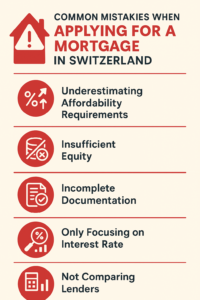
Common Mistakes When Applying for a Mortgage in Switzerland
Applying for a mortgage in Switzerland can feel complex, especially for first-time buyers or expats unfamiliar with local lending rules. While Swiss banks are known for their stability and clear criteria, many borrowers still make avoidable mistakes that can delay approval, reduce borrowing power, or lead to higher long-term costs. Understanding these pitfalls in advance helps ensure a smooth application process and increases your chances of securing the best mortgage terms on the market (common mortgage mistakes Switzerland).
One of the most common mistakes is underestimating affordability requirements. Switzerland has strict affordability rules: your total housing costs—interest, amortization, and property expenses—must not exceed roughly one-third of your gross income. Many applicants assume affordability is calculated using current rates, but lenders use a higher imputed rate to ensure long-term feasibility. Not knowing this can create unrealistic expectations about your budget and lead to disappointment when banks approve a lower amount.
Another frequent issue is insufficient equity. Swiss regulations require a minimum of 20% down payment, and at least 10% must come from non-pension assets. Borrowers often overlook this rule or assume all equity can come from pension funds. Planning your equity structure early helps avoid last-minute surprises and ensures you meet lender requirements.
Applicants also commonly submit incomplete or inconsistent documentation, which significantly slows down the mortgage process. Swiss banks require precise records: salary statements, tax returns, pension fund details, asset statements, and any existing credit obligations. Missing documents, outdated statements, or discrepancies between declared income and tax records can cause unnecessary delays. Preparing all paperwork in advance—clean, complete, and up-to-date—makes the process faster and smoother.
A major strategic error is focusing only on the interest rate. While the rate is important, Swiss mortgages include multiple components: amortization obligations, SARON vs fixed-rate structures, penalties for early repayment, and long-term cost differences. Choosing the wrong mortgage type for your lifestyle and risk tolerance can lead to significant financial stress later. For example, SARON mortgages offer flexibility but may expose you to rising interest rates; long-term fixed mortgages provide stability but lock you into higher penalties if you refinance or sell early.
Another mistake is not comparing multiple lenders. Many borrowers approach only one bank—often their current bank—assuming they will receive the best offer. In Switzerland, mortgage rates and conditions vary significantly between lenders, insurance companies, and pension funds. Comparing several offers or working with an independent mortgage broker ensures better terms and potentially long-term savings.
Finally, borrowers sometimes rush into property commitments before securing financing. Making an offer without pre-approval can lead to financial risk, especially in competitive markets. A pre-approval not only strengthens your position with sellers but also clarifies your true purchasing capacity.
Avoiding these common mistakes helps you secure a mortgage that fits your financial situation, protects your long-term goals, and ensures a smoother home-buying process.