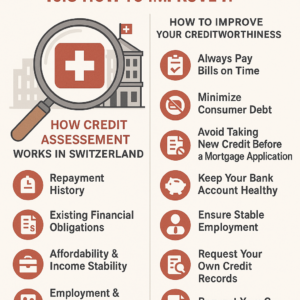
How Credit Score Works in Switzerland (and How to Improve It)
Switzerland does not use the same credit-scoring system as the United States or the United Kingdom. Instead of a single universal “credit score,” Swiss lenders rely on a combination of financial indicators, payment history, and affordability requirements to assess your creditworthiness. Understanding how this system works is essential if you want to secure a mortgage at the best possible conditions (Swiss credit score mortgage).
How Credit Assessment Works in Switzerland
In Switzerland, consumer credit information is mainly collected and managed by several databases—most notably ZEK, IKO, and internal bank records. Rather than providing one numeric score, these systems store your credit agreements and past repayment behaviour. When you apply for a mortgage, the lender accesses these records and evaluates:
1. Repayment History
Banks check whether you have ever defaulted on payments, had late instalments, or encountered collection procedures. Any negative entries—such as unpaid loans or leasing contracts—can significantly reduce your chances of mortgage approval.
2. Existing Financial Obligations
Your open loans, leasing contracts, credit cards, and other recurring obligations are listed in the central databases. High levels of existing debt indicate more risk and may reduce your borrowing capacity.
3. Affordability and Income Stability
Swiss lenders must ensure your housing costs do not exceed one-third of your gross income. Even with a perfect credit record, a mortgage cannot be approved if affordability rules are not met.
4. Employment and Residence Status
Stable, long-term employment strengthens your creditworthiness. For expats, residence permits (B or C) also influence bank decisions.
5. Bank Internal Rating
Each financial institution uses its own risk model to create an internal rating. This is confidential and not shared with clients.
How to Improve Your Creditworthiness in Switzerland
Improving your creditworthiness is not about raising a single number—it’s about strengthening your financial profile.
Here are the most effective strategies:
1. Always Pay Bills on Time
Late payments—even from phone bills or medical invoices—can escalate into collection entries that severely harm your credit file.
2. Minimize Consumer Debt
If you have credit card balances, personal loans, or leasing contracts, reduce them before applying for a mortgage. Banks consider these obligations when evaluating affordability.
3. Avoid Taking New Credit Before a Mortgage Application
New credit lines (leasing, electronics financing, credit cards) raise red flags and lower your borrowing capacity.
4. Keep Your Bank Account Healthy
Consistent savings, a positive account balance, and avoiding overdrafts help build trust with your lender (Swiss credit score mortgage).
5. Ensure Stable Employment
Long employment periods and permanent contracts strengthen your credibility. Avoid changing jobs right before applying for a mortgage.
6. Request Your Own Credit Records
You can request your ZEK/Iko file to verify accuracy and correct errors. This prevents mistakes from affecting your application.