Swiss mortgage rate trends
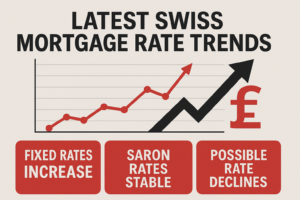
Swiss mortgage rates have experienced notable fluctuations over the past several years, influenced by global economic conditions, inflation cycles, and decisions made by the Swiss National Bank (SNB). Understanding these trends is essential for anyone planning to buy property, refinance an existing mortgage, or switch providers for better long-term financial stability. This article outlines the most important current developments in Swiss mortgage rates and helps borrowers understand what they may expect going forward (Swiss mortgage rate trends).
Shift From Negative Rates to a Normalizing Market
For nearly a decade, Switzerland was one of the few countries in the world with negative interest rates. This unusual monetary environment kept mortgage rates extremely low, making homeownership more accessible. However, in 2022, amid rising global inflation, the SNB began tightening monetary policy. The base interest rate was gradually lifted back into positive territory, causing mortgage rates—particularly fixed-rate mortgages—to increase from historical lows.
By 2023–2024, fixed-rate mortgages had climbed significantly, in some cases doubling compared to their pandemic-era levels. Despite this, Swiss rates remained relatively moderate compared to the European average, reflecting the stability of the domestic financial system.
SARON Rates: A Popular Alternative
As fixed-rate products became more expensive, SARON (Swiss Average Rate Overnight) mortgages grew in popularity. Because SARON is tied to the overnight repo market, it reacts quickly to SNB decisions but tends to be lower than fixed-term rates during periods of stable or declining monetary tightening.
In late 2024 and early 2025, SARON-based mortgages have demonstrated more stable pricing, often making them the more cost-effective option—particularly for borrowers willing to accept variable interest rate risk. Many lenders now offer partially or fully SARON-indexed mortgages, increasing competition and helping keep variable rates attractive.
Signs of Stabilization and Possible Declines
With inflation cooling, analysts expect the SNB to consider moderate rate cuts over the coming quarters. This has already influenced forward-looking mortgage rates, with some banks offering slightly reduced fixed-rate options in anticipation of a more accommodative monetary policy.
Borrowers refinancing or renewing mortgages in 2025 are likely to find improved conditions compared to 2023’s peak. However, long-term fixed rates remain higher than SARON options, reflecting lingering uncertainty in global economic conditions.
What Borrowers Should Watch in 2025
- SNB monetary policy meetings – Future cuts or pauses will directly impact SARON and indirectly affect fixed rates.
- Inflation forecasts – Lower inflation typically leads to declining long-term financing costs.
- Global market stability – Events in the EU and US bond markets can influence Swiss mortgage pricing.
- Bank-specific promotions – Competitive pressure has increased substantially, offering borrowers more room for negotiation.
Outlook
Overall, Swiss mortgage rate trends point toward gradual normalization and potentially lower costs over the next few years. For borrowers, this means 2025 could be an excellent time to review mortgage strategies—whether choosing SARON for short-term flexibility or locking in a fixed rate if favorable long-term offers appear.